originally posted on 8/8/2020
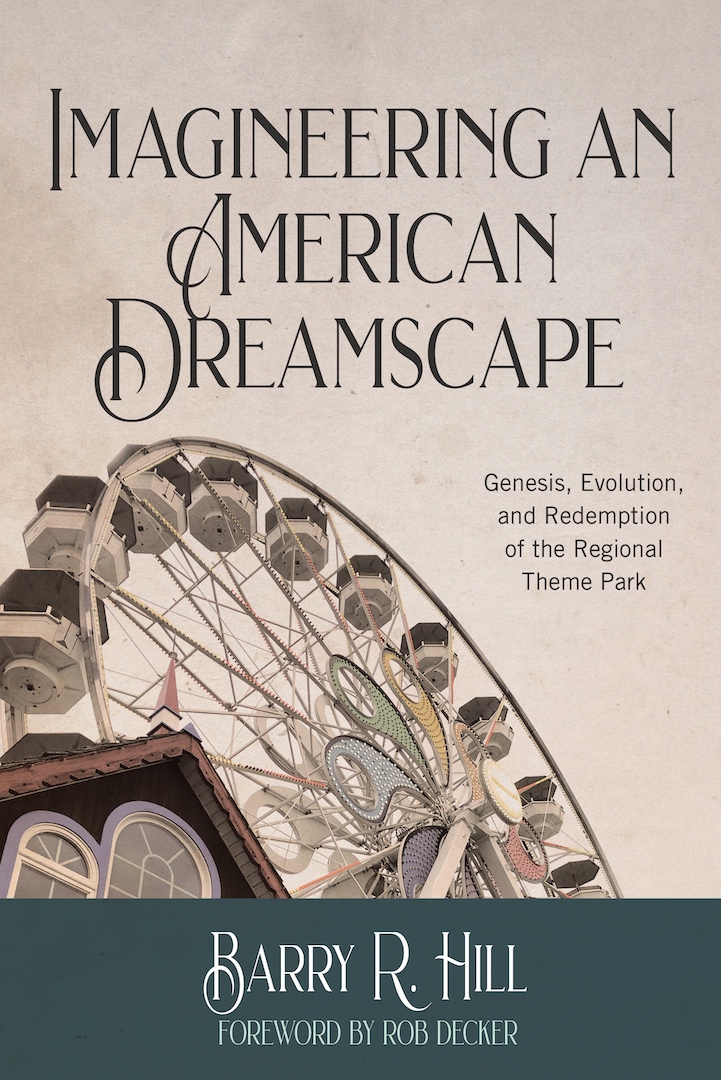
Imagineering an American Dreamscape, a Look at the Evolution of Theme Parks, by Barry R. Hill.
View full-sized image.
A couple of things about the cover of the new book by author Barry R. Hill might be deceiving. Imagineering is a term quite often associated with Disney. There have been many a book written about Walt Disney, Disneyland and the empire that followed. That’s not what this book is about. It is an amazing journey that documents the regional theme parks that proliferated the American landscape once Walt Disney had proven the concept. A simple picture of Hersheypark’s Ferris wheel on the cover may not convey to a potential reader the breadth and scope of more than a half century of history. It’s all there, and it’s an entertaining read, particularly for loyal fans such as those who make up ACE’s membership.
 ACEers consider themselves a knowledgeable bunch, and, compared with the average park guest, they are. But even when reading about one’s local park, a member — or any reader — is bound to find details and backstory about which he or she may not have been aware. For park fans, this is the book they’ve been waiting for.
It starts with a glimpse “Before Walt,” followed by a chapter on Disneyland. Then the book takes the reader on a journey through the hits and misses of major metropolitan cities wanting parks of their own, particularly through the 1960s and 70s. What makes it a thrilling ride is Hill’s approach to the subject matter. Unlike most books that list and recall facts, dates and details, Hill’s book takes the reader along for the ride. Its engaging prose almost includes the reader in the conversation. If there was a book club in which park fans sat around and discussed chapters over a glass of wine, this would be the book to form such a group. The further into the book a person reads, the greater the temptation to share personal reflections and continue the conversation.
This is particularly true when the author jumps ahead a half century to the parks as they are known today. Chapters like “Who says we can’t build a theme park now?” and “Evolution” and “Redemption” swirl all sorts of ideas, criticisms and observations regarding how some of these parks have lost their identities as a revolving door of ownerships come in, discard original ideas and replace them with their own brands, only to cast the parks aside a few short years down the road. Such corporations have very little consideration of the damage left in their wake as the park is acquired by the latest owner. Hill points to some triumphant moments when new owners have made the right moves. It’s an interesting platform to stand back from a distance and look at the big picture — the changing amusement industry as a whole.
Hill writes, “Longtime fans of each park can spend hours, if not days, scouring around looking for original buildings and other remnants from their childhoods. One feels like an archaeologist digging through the layers of great societal change to uncover the original bones. Much of this is a sad trek, wistfully recalling the good ole’ days when the park was really their park. It once told a story, however lightly, about their heritage and where they lived.”
Imagineering an American Dreamscape is a long overdue look at the rise of the regional theme park. Don’t look for mega-giants here; the Universals and Disney resorts are their own global destination genre. This book spotlights what most Americans have come to know: the regional parks that they have grown up with. The book also doesn’t feature pictures. The author explains that most of that is available with simple searches on the internet. This book is about the stories. And if details are ever in question, Hill supplies more than 40 pages of bibliography and indexed notes backing up his research.
Before his “Final Notes,” two added chapters are included from different authors. Storyland Studios’ Mel McGowan speaks on the significant importance of Randall Duell and his team for decades of work in designing park concepts. Rick Bastrop from R&R Creative offers a personal retrospective, “Learning from Legends,” that features some of the more notable behind-the-scenes key figures. This reviewer wishes those chapters would had come followed the author’s conclusion (somewhat like DVD extras) so that the flow of the book would have gone uninterrupted. However, those additional authors share topics that certainly fit within the scope of the subject matter.
This book is suitable for any park fan, industry professional or local citizens proud of their hometown park. For an ACE member, it comes highly recommended.
The book is 295 pages and is available at RivershoreCreative.com, Amazon, Barnes & Noble or by ordering from a local bookstore.
— Tim Baldwin
ACE News Editor
@#$%&!
#ACENews